


In nonprofit leadership, there’s no shortage of complexity. Whether you’re navigating a transition, making tough decisions, or trying to lead with clarity in the midst of daily urgency—support matters. But not all support is created equal.
At EvolveTCF, one thing we specialize in is executive coaching for nonprofit leaders. This is a reflective, relationship-centered process. We ask the right questions to help leaders uncover their own answers, build self-awareness, and lead with clarity.
Nonprofit leadership coaching is about developing the leader, not just solving the problem. Here are four key moments when coaching for nonprofit leaders can make a transformational difference.
1. A New Executive Director Needs Space to Lead Authentically
When a new ED steps into the role, they’re often navigating inherited systems, board expectations, and team dynamics—all while trying to find their leadership voice.
The early months of a new ED’s tenure are often filled with invisible pressure: to reassure funders, to carry forward the legacy, to avoid missteps. But leadership isn’t plug-and-play—it’s personal.
Executive coaching for nonprofit leaders offers a confidential space for reflection, identity work, and decision-making support—helping them lead with clarity and confidence, not just compliance.
This program allows new leaders to:
- Clarify their values and vision
- Reflect on inherited patterns they may want to shift
- Build confidence and boundaries without isolating themselves
Nonprofit leadership coaching gives them space to become the leader they need to be, not just survive the role.
2. An Outgoing Leader Is Preparing to Leave with Intention
Departures can be emotionally and professionally complex. A long-tenured ED may struggle with letting go, defining legacy, or managing role shifts.
Letting go is hard—even when it’s planned. Especially when the role has been deeply tied to one’s identity or community relationships. Without support, the exit can feel disjointed, heavy, or unclear.
Executive coaching for nonprofit leaders, in this case, supports the emotional transition. More specifically, it helps surface unspoken tensions and equips the leader to exit with grace, integrity, and alignment.
In this phase, nonprofit executive coaching creates space to:
- Explore the inner work of letting go
- Define legacy without holding on too tightly
- Clarify roles and responsibilities during the handoff
- Prepare emotionally for what’s next
Exits done well don’t just benefit the departing leader—they create stability for the team and space for the next chapter to begin.
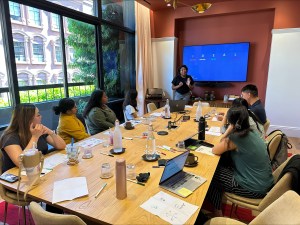
3. The Board Chair or Transition Committee Feels Uncertain in Their Leadership
When those guiding the transition are overwhelmed or unclear in their role, it can delay progress or create confusion for others.
Leadership transitions are board-level work—but that doesn’t mean board leaders always feel equipped for it. Uncertainty about timing, role clarity, or decision-making authority can create confusion across the organization.
Nonprofit leadership coaching provides individualized support to build leadership presence, make grounded decisions, and lead the transition with steadiness and intentionality.
According to recent research on nonprofit leadership effectiveness, organizations that invest in leadership development see significantly better outcomes in both organizational performance and employee retention.
For board chairs or committee leads, coaching for nonprofit leaders helps:
- Clarify what is—and isn’t—their role to play
- Prepare for key conversations with confidence
- Lead from shared values, not fear or urgency
When the board’s leadership is steady, everyone else can move with more trust.
4. The New Leadership Team Is Experiencing Growing Pains
Sometimes a leadership team isn’t misaligned—they’re just new, learning to trust one another, and figuring out how to work together.
Not every challenge is a crisis. Sometimes it’s just the natural friction of forming a new team—different styles, unclear norms, or rapid change.
Executive coaching for nonprofit leaders offers a container for leaders to explore their patterns, grow self-awareness, and practice communication skills in real time—creating stronger collaboration and resilience.
In team or group nonprofit executive coaching, leaders can:
- Develop shared language and expectations
- Reflect on interpersonal dynamics in a safe space
- Practice communication and feedback skills together
The goal isn’t to fix the team—it’s to help them grow trust, skills, and clarity as they lead forward.
Why Coaching Matters in Moments of Transition
These are all real, lived experiences across the nonprofit sector. In each one, nonprofit leadership coaching offers something essential: space to think, feel, and lead with intention.
Coaching for nonprofit leaders isn’t advice or a fix. It’s a partnership that invites leaders to grow from the inside out—so they can move through change with clarity and confidence.
Research consistently demonstrates the effectiveness of executive coaching. A 2023 meta-analysis found that executive coaching produces significant positive changes in behaviors, attitudes, and personal characteristics, with particularly strong impacts on self-efficacy, psychological capital, and resilience.
For nonprofit leaders who often face unique challenges—limited resources, complex stakeholder relationships, and mission-driven pressure—executive coaching for nonprofit leaders provides the specialized support needed to thrive.
Curious If Coaching Is Right for You?
Whether you’re stepping into a new role, preparing for a transition, or simply wanting to lead with greater intention, coaching for nonprofit leaders can provide the support and space you need to grow.
At EvolveTCF, our nonprofit executive coaching is designed specifically for the unique challenges and opportunities of mission-driven leadership. We understand the sector, the pressures, and the profound responsibility that comes with leading change.
Executive coaching for nonprofit leaders is an investment in both personal growth and organizational sustainability. Because when leaders thrive, missions thrive.
You may want to explore coaching if:
- You’re in a new or expanding leadership role
- You’re navigating organizational change or team tension
- You want to strengthen your leadership presence or voice
- You’re committed to growth, but need space to step back and reflect
We work with Executive Directors, board chairs, and leadership teams who are holding big responsibilities—and want to lead with steadiness, not just survival.
Missed Another Article in This Series? Check It Out Below:
This post is part of our “Coaching, Consulting, Training, and Facilitation: Knowing the Difference Matters” leadership series for nonprofit Executive Directors, board leaders, and program teams who are building sustainable, people-centered organizations.
Explore the full series:
| Title | Topic |
|---|---|
| Coaching, Consulting, Training, and Facilitation: What’s the Difference and Why It Matters | Overview of common support types and how to use them well |
| Coaching: Developing the Leader, Not Just Solving the Problem (you’re here) | Reflective support for EDs, boards, and leadership teams |
| Consulting: Bringing Strategy, Clarity, and Outside Perspective | Organizational alignment, planning, and structural clarity |
| Training: Building Practical Skills Across the Organization | Equipping staff with tools, language, and leadership practices |
| Facilitation: Holding Space for Hard Conversations and Aligned Decisions | Navigating conflict, transition, and strategy with care |
Each one is built to help your team lead with clarity, courage, and care—without defaulting to overwork or overwhelm.
Want to take these ideas deeper with your board or team? Let’s start a conversation about what support looks like at your next turning point.